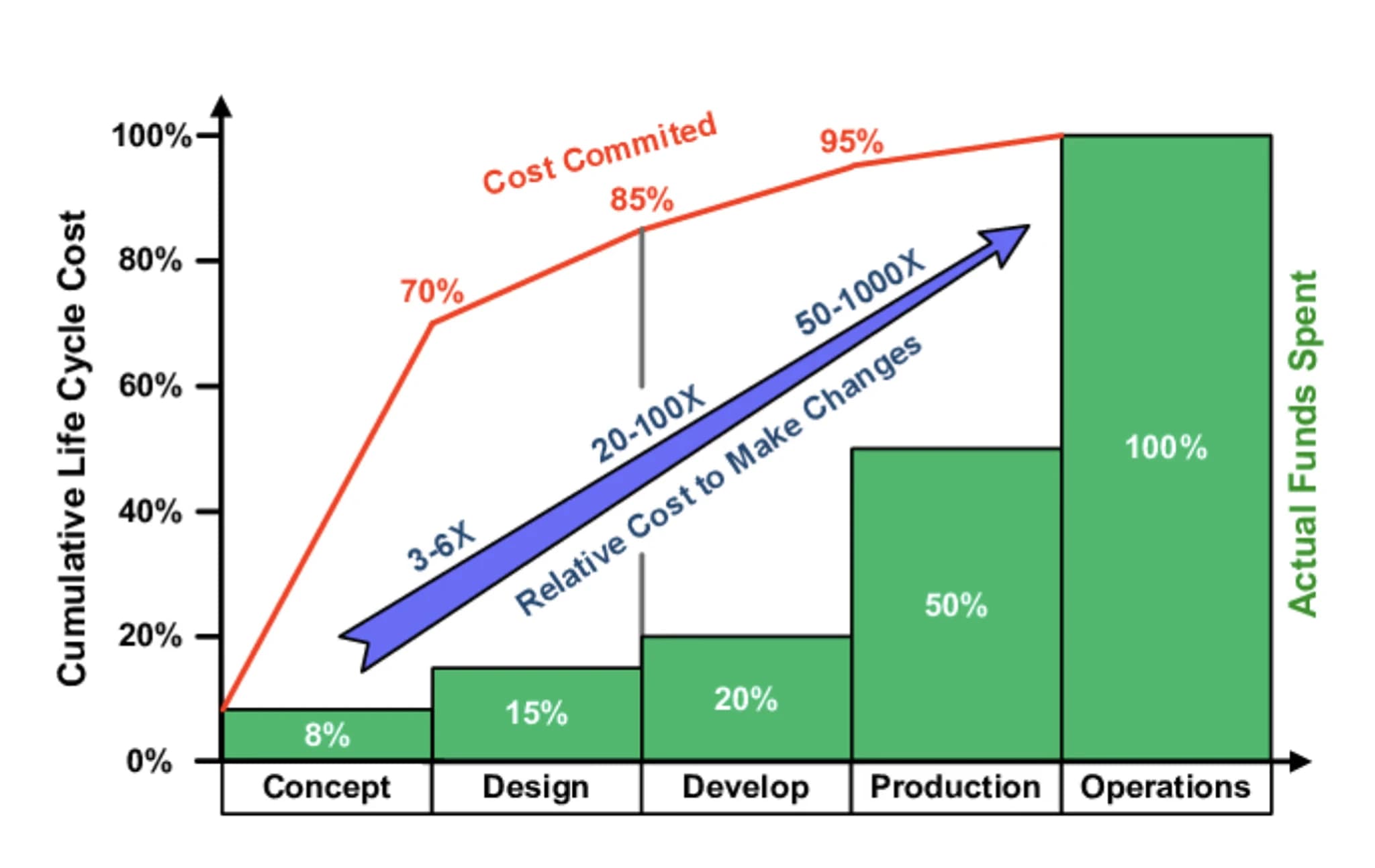
Every systems engineering program manages the same information, requirements, architecture, interfaces, analysis, and verification. The difference between document-based and model-based systems engineering (MBSE) is *how* that information is stored and kept consistent.
The core difference
In document-based systems engineering, the system is described across many standalone artifacts: requirement specifications, Visio or PowerPoint diagrams, interface control documents, and verification spreadsheets. Each is authored and maintained separately. In MBSE, all of that information lives in a single connected model where every element is linked, so the artifacts you need (specs, diagrams, matrices) are *views* generated from one consistent source.
Side-by-side comparison
| Dimension | Document-based | Model-based (MBSE) |
|---|---|---|
| Source of truth | Many separate documents | One connected model |
| Traceability | Manual, error-prone cross-references | Automatic, queryable links |
| Impact of change | Hand-reconciled across files | Instant impact analysis |
| Consistency | Documents drift out of sync | Single source stays consistent |
| Reuse | Copy-paste | Reusable model elements |
| Verification | Tracked in spreadsheets | Linked to requirements in-model |
| Knowledge capture | Prose; intent often lost | Structured, persistent design intent |
Where document-based engineering breaks down
Document-based methods work for small, stable systems. They break down as complexity grows:
- Synchronization debt: keeping hundreds of documents consistent becomes a full-time effort, and it slips.
- Hidden change impact: a requirement change can silently invalidate interfaces and tests no one updated.
- Slow, risky reviews: reviewers can't trust that the documents in front of them agree with each other.
- Lost intent: the reasoning behind decisions lives in people's heads and email threads, not in a durable record.
When to move to MBSE
Consider MBSE when your system has many interdependent requirements, multiple disciplines or teams, certification or compliance obligations, or a long life cycle where design intent must survive staff turnover. These are exactly the conditions where the cost of document drift exceeds the cost of adopting a model.
Dalus is built for exactly this transition: a connected model with the approachability teams expect from modern software, plus an AI copilot that helps you build and query it. See what MBSE is or read about the move from documents to models.
Frequently asked questions
What is the difference between MBSE and document-based systems engineering?+
Document-based systems engineering stores the system across separate documents that must be kept in sync manually. MBSE stores the same information in one connected model, where requirements, architecture, and verification are linked, giving automatic traceability and instant impact analysis when something changes.
Is MBSE better than document-based systems engineering?+
For complex, safety-critical, or long-lived systems, MBSE is generally superior because it eliminates the synchronization burden and traceability gaps of document-based methods. For very small, stable systems, document-based approaches can still be adequate.
Why do teams still use document-based systems engineering?+
Largely inertia and tooling. Legacy MBSE tools were complex and expensive to adopt, so many teams stayed on familiar documents. Modern, easier-to-use MBSE platforms are removing that barrier.
When should an organization switch to MBSE?+
When systems have many interdependent requirements, span multiple teams or disciplines, face certification requirements, or have a long life cycle where design intent must be preserved, the point at which document drift becomes more costly than adopting a model.